



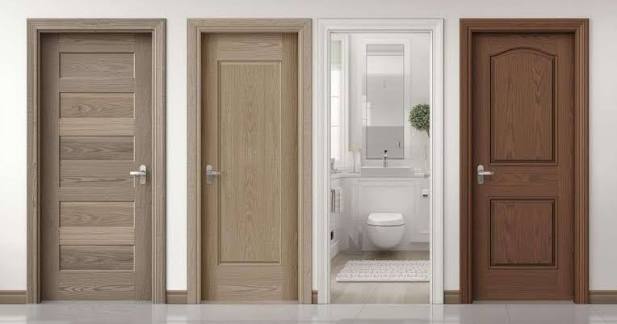
A door is a lot more than appearance, more than simple entry points, doors are exposed to different elements depending on where they’re placed and how they are going to perform. From water and humidity to comfort requirements without warping or taking damage. This is the reason why homeowners are opting for wood polymer composite doors or WPC doors.
These doors are moistureproof, stable and longevity is a factor in the final choice. We at Greenply know that. All our products, such as our WPC boards, are tested to ensure that they can cope with harsh conditions easily. Let’s take the time to explore what WPC doors, their frames, and suitability for bathrooms and bedrooms might mean for homeowners in this guide.
What Are WPC Doors?
WPC is produced by integrating wood fibres and using plastics as polymer binder to guarantee the smooth surface and stability of the product. Unlike wooden doors, WPC is not prone to shrinking or swelling, and can absorb moisture.
WPC doors have several distinct features, such as:
- Moisture resistant and suitable for humid and moist areas.
- High quality surface finish on Laminates, paints or veneers.
- Solid pest resistance
- Can withstand change of seasons without losing form.
Does not require the same maintenance as wood
The doors by Greenply for bathroom and utility area applications are preferred due to these features.
Application-Based Suitability
A few of the rooms are not as performative as others. In the following, you can see how WPC performs in the spaces:
A. WPC Doors for Bathrooms
Wooden doors can become swollen and lose lamination as a result of the moisture found in bathrooms, but WPC doors can take it on the chin due to:
- Non-absorbing structure
- No bulges or warping
- Pest resistance
- Easy to clean surfaces
Wooden doors can be replaced with WPC bathroom doors or by Greenply’s Gold Doors that are reliable in moist and humid environments.
WPC Door for Kitchen & Lavatory
Bedrooms must be private, and easy to clean and quiet. Solid wood is a good material to use for sound insulation. But for bedroom doors, a WPC door should be sufficient for privacy and cleanliness, and can be used with laminates or veneer sheets.
Kitchen/Utility Area
Kitchens and utility areas will suffer damage from heat and moisture; WPC is not susceptible to temperature changes. Suitable for front doors and outside spaces in a kitchen.
A comparison of WPC vs Traditional Door Materials
WPC vs Solid Wood
Solid sure is indeed a high-quality option, however it needs maintenance. Meanwhile, WPC offers:
- Moisture resistant
- No need of maintenance polishing.
- Smooth surface
- Better cost efficiency
- WPC vs Laminated Flush Doors
Cost-effective at the time of purchase, flush doors swell in the bathrooms.
WPC and Greenply’s Decorative doors do not swell and remain even and even throughout use.
WPC vs PVC Doors
- PVC doors are not as strong or durable as service, but they are less expensive.
- WPC is thick, heavy duty and offers a luxurious touch.
- WPC Door Frame & System Integration
While internal doors do need matching frames, a WPC door frame will enhance performance by:
- Resisting termite infections
- Does not crouch when used for long periods.
- Consistency in structure and with door leaf
- Hardware alignment remains unchanged.
A WPC door with frame will make it easier for installation and will minimize post-installation problems with the hinge, gap or entire fitting.
Advantages of Employing WPC in Residences
Homeowners prefer the wood polymer composite doors because of their practicality and performance, even during renovation. Let’s have a look at some essential benefits:
- Ideal for moist areas, such as bathrooms
- Ideal for climatic conditions.
- Combines well with laminates, paint or veneer
- They can be used and maintained easily without any polishing or seasonal changing required.
- No worry of warping or sagging
For the applications of WPC Door, greenply value proposition is shown below.
The Indian usage requirements are taken into account while designing Greenply products, where the homeowners mainly consider moisture, wear and the different climatic conditions. Greenply’s Green Ndure can ensure for WPC category applications:
The durability of materials used to keep doors closed
Water-resistant features in bathrooms and utility rooms.Water-resistant in bathrooms and utility rooms.
- The ability to resist pests in service for a long time.
- Smooth surface feel – best for laminates and veneers
- A decent product support and guarantee.
- Every part of the system has a price tag.
Door costs are affected by a lot more factors than just the leaf
- Door leaf cost
- Frame cost
- The cost of the hardware (handles, hinges, locks)
- Surface finishing (laminate/paint)
- Installation & labour
The cost of WPC doors is influenced by:
- The thickness of the WPC sheet.
- Density/grade quality
- If it has a frame
- Surface finishing requirement
- Use zone (bedroom/bathroom)
A WPC door with frame price can cost more initially, but due to its solid structure and lack of maintenance problems later on. However, homeowners need to do some research and create a full WPC door cost guide to determine the best option for them.
Based on the use case, a buying guide has been created to help with the selection process.
The space will determine the choice of the WPC door, here are a few points to consider:
For Bathrooms
- Recommended: WPC door with moisture resistant WPC frame.
- Advantage: It is resistant to swelling, warping and pests and will retain its durability in humid conditions.
For Bedrooms
- Recommended: WPC door with high quality laminate cladding.
- Drawbacks: Can be costly and difficult to install, will darken rooms, and will reduce the amount of natural light.
Use in Kitchen Utility Zones
- Suggested: WPC door with heat-resistant hardware
- Advantages: Long lasting, heat resistant and durable in hot environments.
Conclusion
WPC doors are dependable and dependable choices for the bathroom, bedroom and kitchen space. These boards are pest resistant, water-proof and have similar surface making them perfect for Indian home use. Additionally, you can choose to combine a WPC door and a frame and obtain an ideal fit for long service life.
We know how important it is to make the right choice of material for your home and we have the perfect answer for you – Ndure WPC boards. Our products are tested under real life conditions, so that they perform to the standard and reliability they are expected to.
Check out Greenply’s website or contact an authorised dealer for assistance today to see what will work for you.
FAQs
Can WPC be used in bathrooms?
Yes. These do not swell or swell like wooden doors and are moisture-proof.
Are WPC doors termite resistant?
However, WPC doors are resistant to pest attacks, even as they are made of polymer.
Is it ok to use WPC doors in bedrooms?
Yes. For bedroom a WPC door is suitable because it is stable and there is little maintenance.
Do you need WPC door frames?
A WPC door frame with a matching frame ensures proper alignment and minimize warping.
Wood polymer composite doors are primarily used for?
They are widely found in modern houses, bathrooms, bedrooms, kitchens and utility rooms.